

Inside the Stadium
The World Cup and the Price of Place

The 2026 World Cup is one for the books, a tournament of firsts. The first to be hosted by three different countries—United States, Mexico, and Canada. The first to feature 48 teams. The first time a single country, Mexico, has hosted the World Cup three times. The first time one stadium, the Azteca, opens a World Cup for the third time. The first time the final will stage a halftime show. And the first time since USA 1994 that no stadiums were built exclusively for the occasion. And while many stories are worth covering with the World Cup, let’s talk about stadiums.
World Cups, like many major competitions, face backlash for their heavy government funding, because once the fans leave, the citizens are stuck footing the bill. For most of these international tournaments, the model is first to build stadiums for the sole purpose of hosting, and then to figure out what to do with them afterward—that’s where most of the funding goes. South Africa built Cape Town Stadium from scratch in 2010, and it barely survives today as a rugby and concert venue, rebranded DHL Stadium. Brazil, the 2014 host, spent more than $3 billion on 12 stadiums, with its priciest venue, the Mané Garrincha in Brasília, a city with no major club, ending up as a parking lot for buses. While 2026 seems to have broken the pattern, at least for now, 2030 and 2034 already have preparations underway and are, in fact, building stadiums. But this time, not one venue was built for the occasion. Every stadium already existed: NFL stadiums in the United States, soccer grounds in Mexico, multi-use venues in Canada. It almost seems like the responsible version.
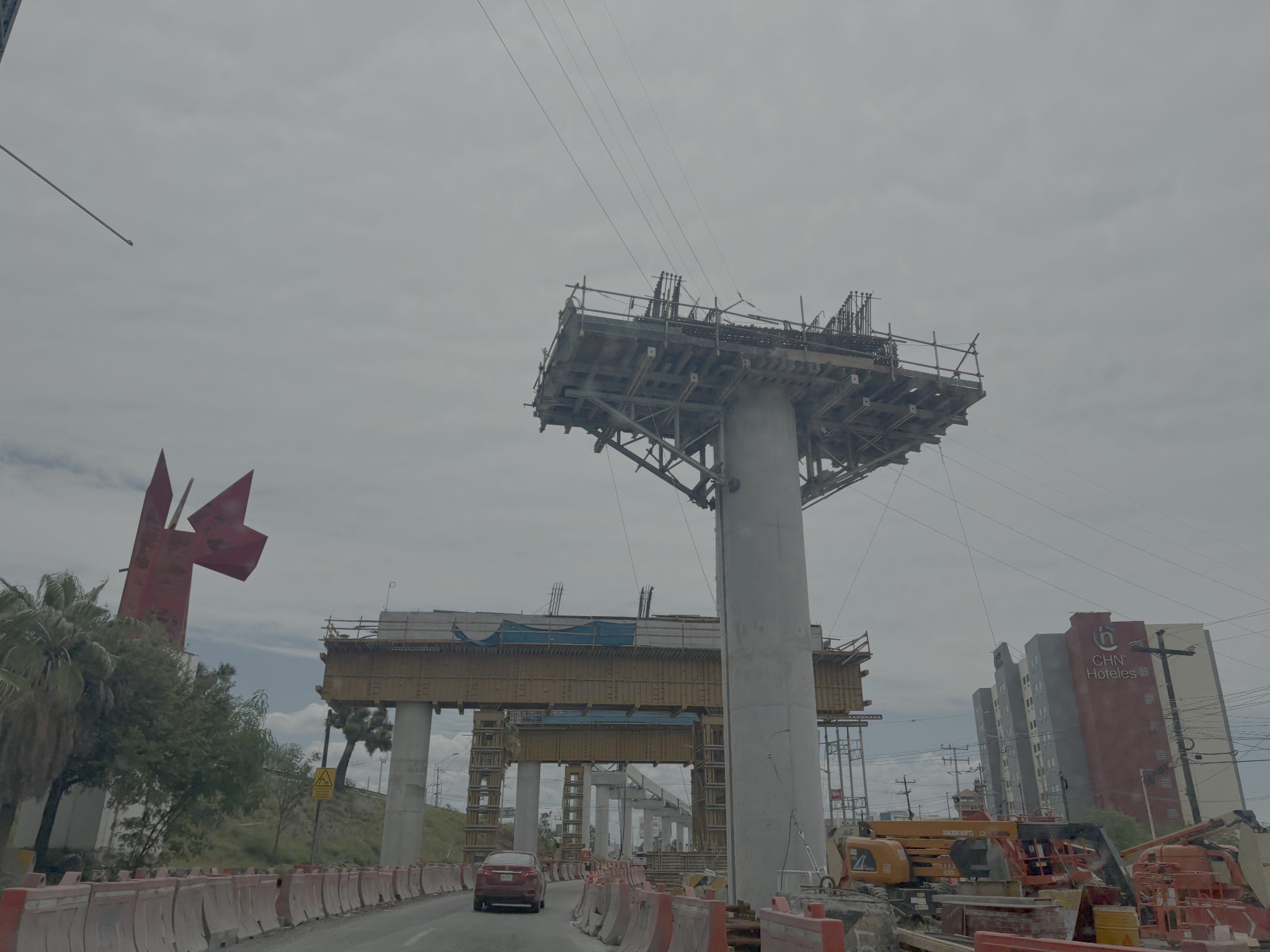
Almost, because even when you don’t build a stadium, hosting still sends a bill. Take Monterrey, where the stadium is privately owned and was renovated by FEMSA. Public money went elsewhere. Governor Samuel García’s administration poured billions of pesos into the city’s metro—25 billion pesos—for three new lines to carry fans from the airport to the stadium, but it won’t be finished until 2027, a year after the fans have gone home. And in the weeks before kickoff, the government raised walls along the avenues tourists would travel, in order to hide the poor neighborhoods. Regios called them the walls of shame. It is the whole logic of the tournament in miniature: cover what you would rather the world not see. This isn’t new; hiding the poor before the international crowds arrive is an old Olympic habit.
Most of the stadiums today carry a corporate name, and because of that, most assume that the money behind them was private, too, but it wasn’t. Most US venues for the World Cup are publicly owned, all three Mexican stadiums are private, and both Canadian venues are public. Of the 30 stadiums that normally host NFL teams, only three were built entirely with private money. The rest took public subsidies, even as the name on the façade says otherwise. This wasn’t always the model.
Through much of the last century, private money built and ran arenas, and public funding for them was almost unthinkable. The shift is fairly recent. As historian Frank Andre Guridy tells it in his book The Stadium, grounds that once carried the names of places and local stories became corporate billboards. This modern wave is usually traced to 1985, when Sacramento developer Gregg Lukenbill sold the naming rights to the Kings’ new home to the Atlantic Richfield Company, and ARCO Arena was born. Naming rights themselves go back further, to Rich Stadium in Buffalo in 1973, but it was only after ARCO that the practice became the rule. Today, nearly every arena in the country answers to a sponsor.
So if they all have corporate names, why don’t we see those names during the World Cup? Because, for six weeks, FIFA covers them up, too. None of these stadiums may use the names their owners sold. MetLife is “New York/New Jersey Stadium,” SoFi is “Los Angeles Stadium,” AT&T is “Dallas Stadium,” Levi’s Stadium in Santa Clara is “San Francisco Bay Area Stadium” (though it’s a good 45-minute drive from San Francisco), Gillette is “Boston Stadium,” and here in the “Atlanta Stadium,” FIFA covered the Mercedes-Benz logos but granted the sole exemption: the giant star at the center of the retractable roof, which couldn’t come down without risking it.
You may have noticed how creative the marketing teams got with the cover-ups. This is FIFA’s “clean venue” policy, which bars any branding not tied to an official FIFA partner, so that the sponsors who paid for the tournament aren’t crowded out by the sponsors who paid for the buildings. Some cities walked: Minneapolis, Chicago, and Glendale pulled out of the bid rather than accept FIFA’s terms. The ones that stayed bet on the benefits they were promised, even when the price falls on the taxpayers or investors who actually pay the bill.
Let’s talk about the legendary Azteca, or for the next six weeks, “Mexico City Stadium.” Mexico has hosted the World Cup in 1970, 1986, and now 2026, and on all three occasions the tournament kicked off there. The Azteca’s résumé runs longer. Two years before that first World Cup, it hosted the football tournament of the 1968 Olympics, the first Games held in Latin America. It was in that stadium, in the 1986 quarterfinal against England, that Diego Maradona produced both the “Hand of God” and the “Goal of the Century,” and beat England 2 to 1. That match was more than football; it was a political moment. Just four years earlier, Argentina had lost the Falklands War, and the game carried all of the emotion. Argentina had lost the islands that they invaded, but Maradona’s handball, the very goal a VAR review would erase today, sent the team through, and Argentina went on to win the final against West Germany.
The Azteca also saw the legendary Pelé, a Brazilian forward who won three World Cups and is still widely considered the greatest ever to play, raise the cup in 1970. That was the last time the trophy was called the Jules Rimet, named after the FIFA president who founded the World Cup. It was that tournament where Brazil got to keep the trophy for good, only for it to be stolen later in Rio, and never recovered.
The same building Pelé and Maradona made iconic was financed in the mid-’60s in part by selling palcos, private boxes, on 99-year titles that promised the holders access to every match and event in the building through 2065. Roughly 800 families hold them. When Mexico’s federation handed FIFA a “clean” stadium, it was handing over access it had already sold decades ago. The stadium’s owner, Grupo Ollamani, paid FIFA $62.4 million to keep those box holders in their seats, and it still wasn’t enough. Days before kickoff, a federal judge sided with FIFA and suspended the owners’ claims. For six weeks, people holding a property title were forced to buy their way back in, under FIFA’s new terms, a total abrogation of their property rights. The man leading their fight is Manuel Negrete, who on June 15, 1986, in that same stadium, scored a scissor-kick against Bulgaria; 40 years later, he was standing at a gate asking to be let in.
It isn’t all bad for the host cities. Here in Atlanta, police reported an 8% drop in crime during the first week of the tournament, defying the usual summer surge. The stadium the State of Georgia owns is operated by Arthur Blank, the Home Depot cofounder who owns the Falcons and Atlanta United, and made the arena famous for keeping concession prices low. The city has been painted red since Spain played two of its group games here, and taking MARTA to a match felt like a thrill, the cars full of fans chanting for La Roja.
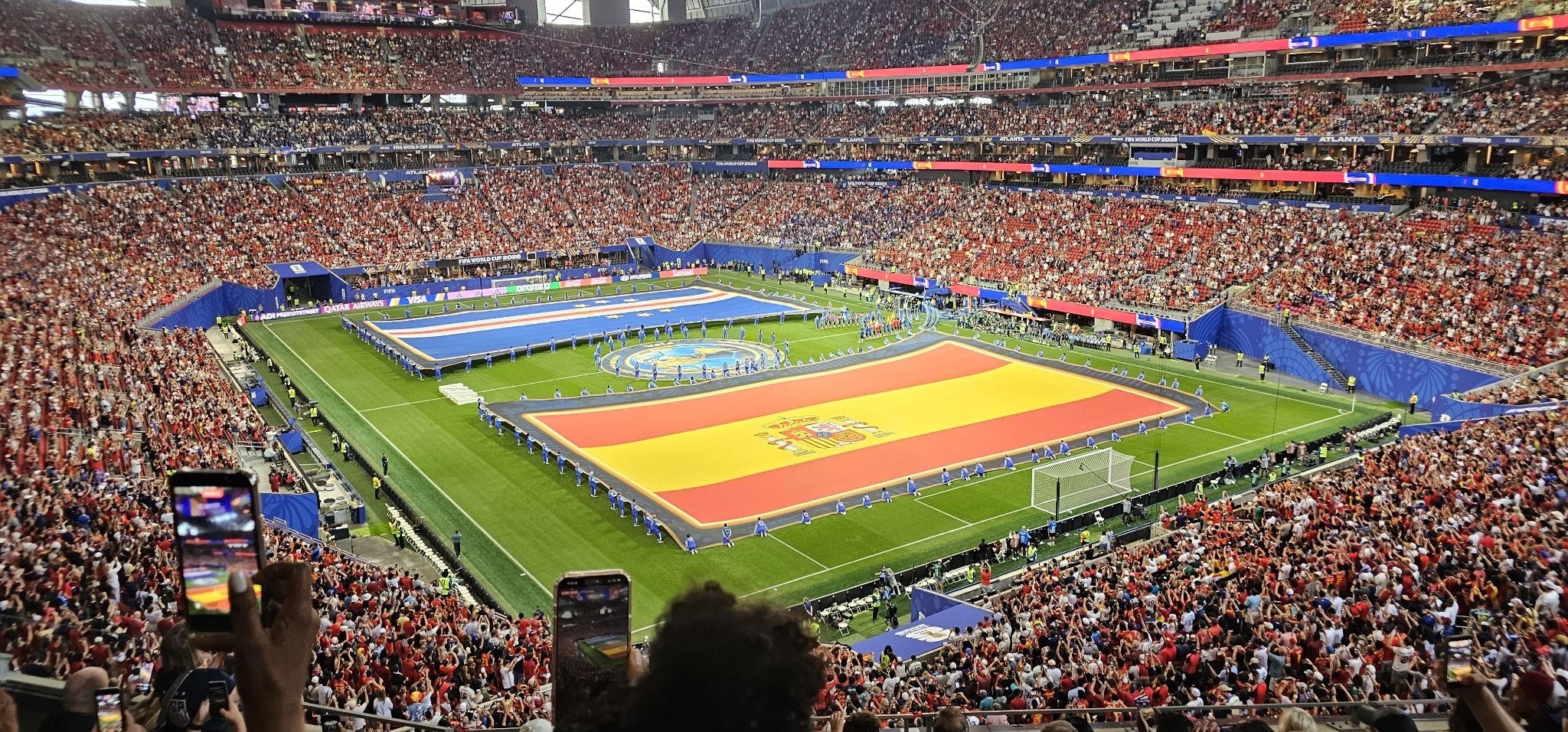
On June 15, exactly 40 years after Negrete’s goal, fans were ready to watch Spain run up the score on Cape Verde, a country of ten islands with fewer people than metro Atlanta, playing its first World Cup. Instead, we witnessed a 40-year-old goalkeeper who goes by “Vozinha” hold the European champions to a draw and make history of his own. Six days later, Spain put four past Saudi Arabia in the same stadium, finally giving fans what they were looking for, as one of the youth talents of this tournament, Lamine Yamal, scored his first World Cup goal.
From inside the stadium, the spectacle is flawless: the music, the chants, the green grass, the fans from every corner of the world, the history being made in front of you. It makes you forget about the controversy and the bill we will face later. Sometimes, even an economist forgets the true cost of the circus.

Daphne Posadas is FEE Studios Director and Deputy Editor of The Freeman. She has a background in think tanks, academia, and media. Daphne holds a B.A. in International Relations and an M.A. in Economics