

Botswana’s Diamond Path
Africa’s Quiet Success Story


By Harry Phibbs.
Stories of war and famine are more likely to make the news bulletins than those of peace and prosperity. Perhaps that’s why we don’t hear much about Botswana—a quiet but remarkable success story. When it gained independence from Britain in 1964, it was one of the poorest countries in Africa. Now it is one of the richest. This landlocked country is sparsely populated. It only has 2.4 million people. Yet it is the envy of its neighbors. According to the IMF, Botswana has a GDP per capita of $21,000, adjusted for purchasing power. That is comparable to poorer European countries such as Albania or Moldova.
What is the explanation? Throwing off the imperial yoke is hardly a guaranteed route to abundance. There are plenty of examples of it proving disastrous.
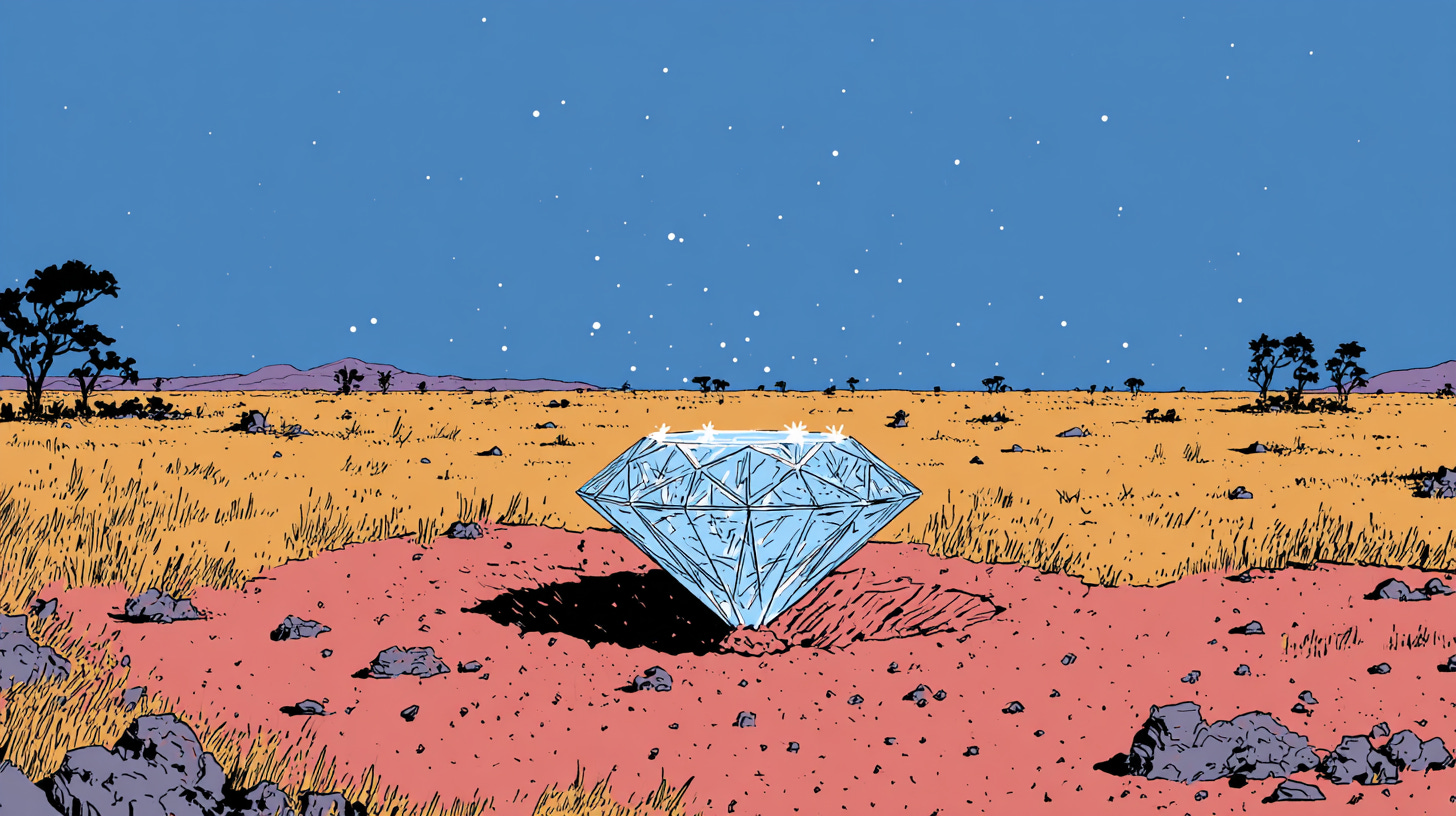
So could it be natural resources? It’s true that Botswana produces more diamonds than any other country in Africa, and this is the source of most of its export revenue. But then elsewhere on the continent, diamonds have famously proved something of a curse.
Congo could produce twice as many diamonds a year as Botswana. However, Congo’s economic potential in this area is disrupted by militia violence and theft. Zimbabwe is a neighboring country to Botswana and could potentially have an equivalent diamond output—but, of course, has had decades of vile misrule.
Sierra Leone, Angola, and Liberia all have plenty of diamonds. Much good it has done them. Civil wars, terrorism, child soldiers, child labor, forced labor. Evil forces have been attracted like bees around a honeypot. In the 2006 film Blood Diamond, a villager remarks, after surviving a brutal attack: “Let’s hope they don’t discover oil here. Then we’d have really big problems.”
Yet there is nothing inevitable about diamonds (or oil) funding terror. It has been possible where the rule of law has broken down. In Botswana, the rule of law has been maintained.
Tourism benefits Botswana’s economy. It is a beautiful country with giraffes, elephants, and hippopotamuses. But then so are plenty of other African countries. While some holiday makers are more adventurous than others, few of us would wish to fly into a war zone or a country where criminal gangs operate unchecked. Botswana’s tourist areas, like the capital Gaborone and the Okavango Delta, are pretty safe.
So by now, most of you will have solved the mystery. Botswana has succeeded by broadly choosing the free market path rather than socialism. Economic development has been driven by the private sector. Property rights are respected. Investors can have confidence that their money will not be confiscated by the state. You don’t need to bribe officials to do business. Free trade is embraced. The top rate of income tax is 25% (compared to 45% in South Africa, for example).
Botswana is a stable democracy. There was a peaceful change of power in 2024. It has a transparent and accountable government. There is freedom of expression, religious freedom, press freedom. Most important is that the trust that follows from all this has been well established over decades.
What a contrast with its northern neighbor Zambia, which has been heading in the opposite direction in the African economic league table. It became independent from Britain in the same year, 1964. But Zambia has gone from being one of the richest African countries to one of the poorest. Its first president, Kenneth Kuanda, remained in power until 1991 and established a socialist dictatorship.
The Zambian economist Dambisa Moyo has offered her country as a case study on the failure of foreign aid. Nationalization and the collectivization of agriculture impoverished the country. Since Kuanda was ousted, its record has been more mixed, but average incomes are less than a quarter of those in Botswana. The 1990s saw some liberalization and democratization. But the presidency of Edgar Lungu, from 2015 to 2021, saw the country regress with subsidies sprayed around in a corrupt manner.
Hakainde Hichilema, Zambia’s president since 2021, has been taking a better course. He welcomed the cuts in overseas aid from the United States as an “opportunity.” He has argued instead that trade and investment must be embraced as the means to sustainable growth. There has been deregulation and greater incentives for business and greater confidence that the law will be upheld rather than state power applied in an arbitrary and erratic manner. The IMF predicts economic growth this year of 6.4%.
So perhaps Zambia will catch up. Botswana is not a pure free-market economy by any means. It would be fair to say it has a mixed economy—some industries are state-owned and there are some subsidies, price controls, and export restrictions. It really stands out as being distinctively capitalist in comparison with other African countries.
There are some positive signs elsewhere on the continent. Rwanda has had an average economic growth rate of 8% in recent years. Extreme poverty fell from 24% in 2011 to 4.5% in 2024. Trade has been liberalized, and the country is proud of being ranked one of the easiest to do business in. Restrictions on women entrepreneurs have been lifted. Dozens of state-owned firms have been privatized in such sectors as telecommunications, banking, tea production, tourism, and manufacturing.
The pace has varied—Ethiopia and Tanzania are other countries with bold market reforms. Namibia’s have been more tentative. But the general move is in the right direction.
There is a change in mentality. Rather than victimhood and regarding countries such as the United States as enemies, the attitude is more self-confident and outward-looking. The wider world is seen as an opportunity, full of customers and investors, rather than as a threat.
The entrepreneur Magatte Wade says: “As a black African woman in the US, I’ve long questioned the narrative of ‘systemic racism’ in the US. I’m not claiming it doesn’t exist, but rather that even with whatever elements do exist, compared either to Senegal (my home country) or France (where I was educated and started my career), the US is a land of extraordinary opportunity for black Africans.”
I don’t know which countries, if any, will overtake Botswana in the years to come. But Botswana, with its small population, does offer an inspiring example with its standard of living of what is possible and how achieving it could be transformational for hundreds of millions of others.

Harry Phibbs is the Local Government editor of Conservative Home. He is a contributor to CapX and a former councilor on Hammersmith and Fulham Council in London.