

Nick Gillespie’s Long, Strange Trip
In Conversation with Reason’s Editor-At-Large, Part I


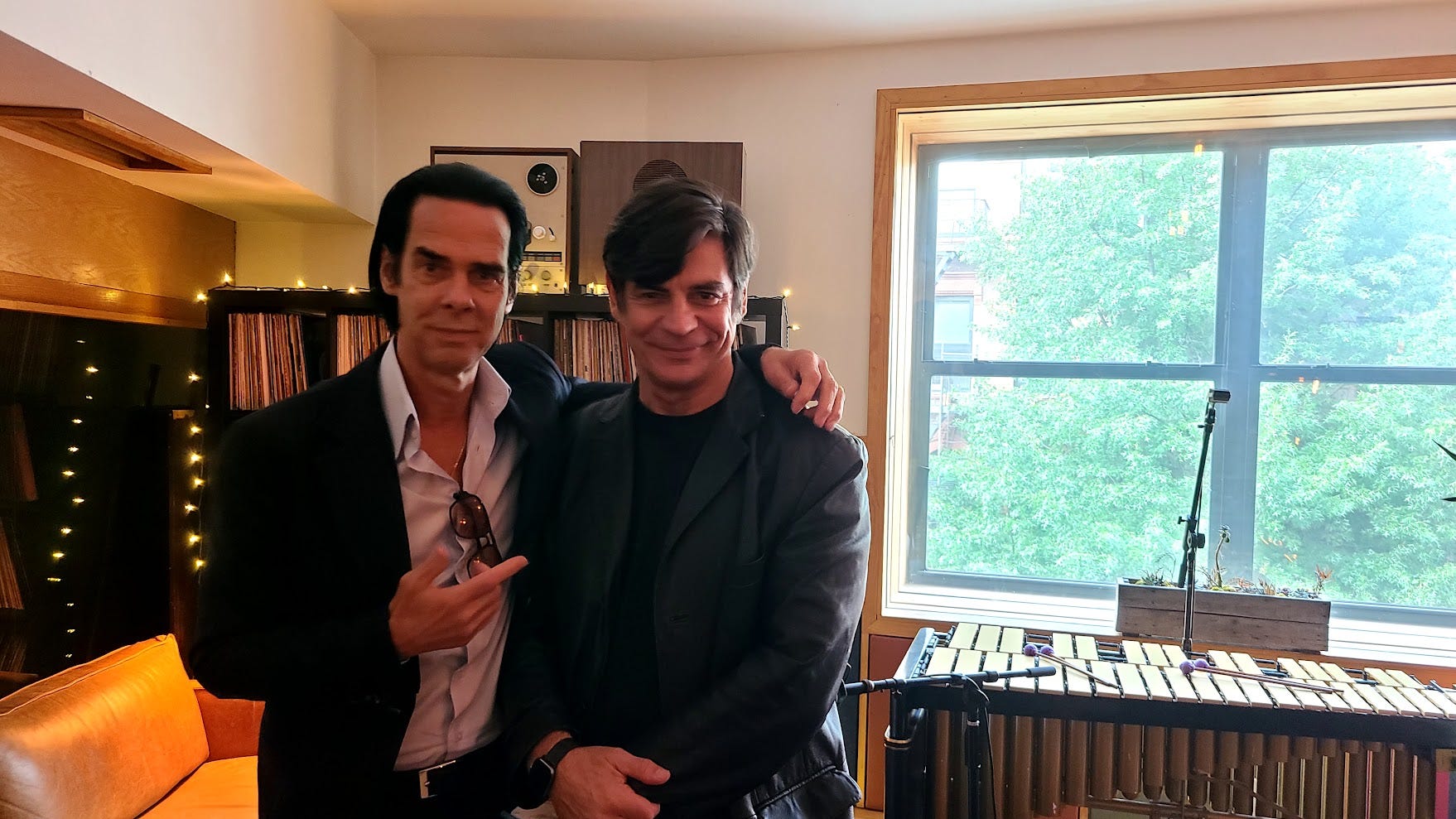
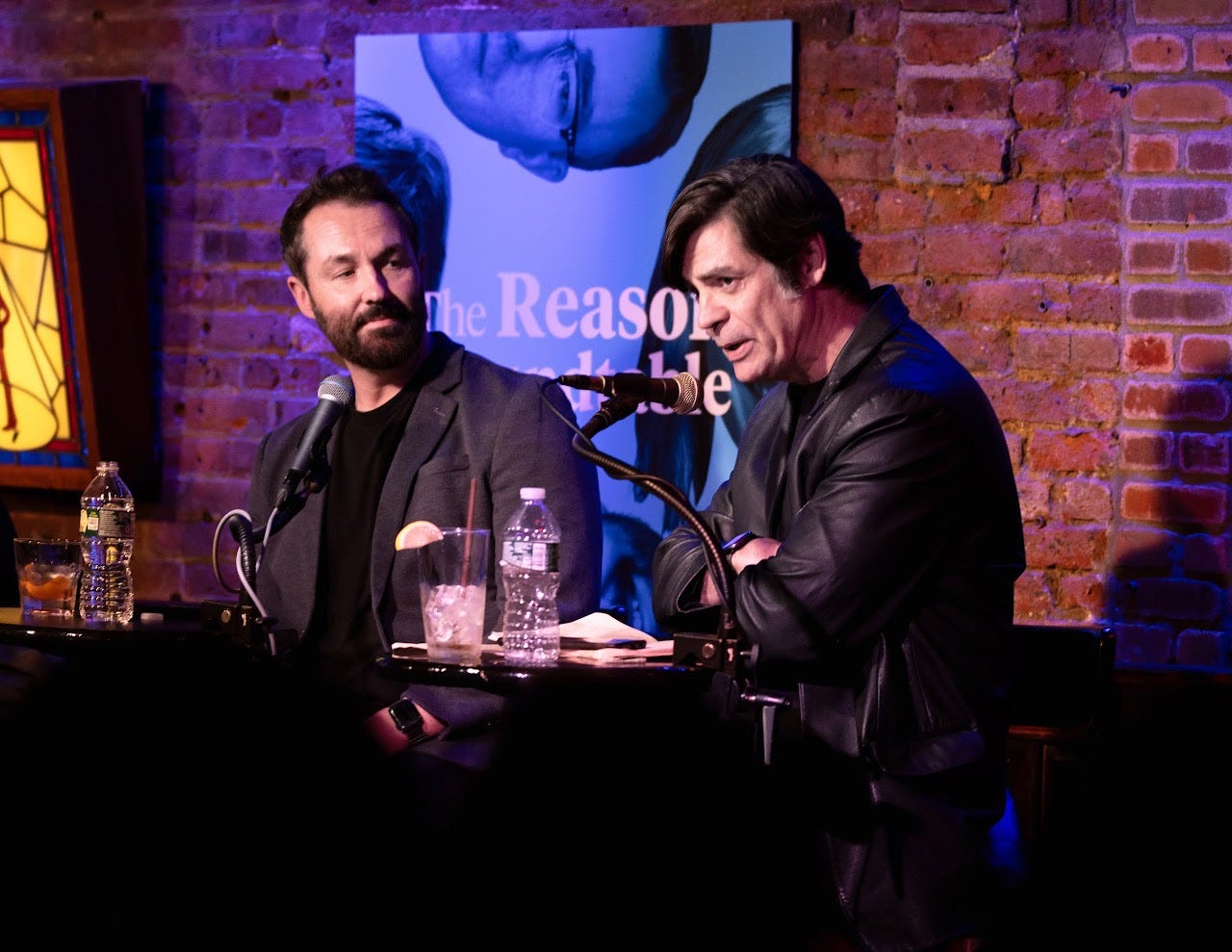
Nick Gillespie might be the only person alive who has interviewed both Nick Cave and Neil Gorsuch; certainly, he’s the only person we know who’s served as both a FEEcon speaker and the voice of Alyssa Milano. Reason’s Editor-At-Large sat down with us to talk generational change, creative destruction, and his path from nonconformist academic to elder statesman of the liberty movement.
FREEMAN: One thing I’ve been thinking about is that we at FEE are inheritors of a radical tradition. We just celebrated our 80th, and I don’t think the liberty movement realizes—or, rather, I think we sometimes forget—that we’re standing on the shoulders of giants. I’ve been rereading Radicals for Capitalism, and the late Brian Doherty spoke a lot about how libertarians always had this “bad-boy image,” that we reveled in our ideas being seen as wacko. But I’m not sure that’s true in the 2020s. When people say there’s no market for libertarianism, I think it’s because the big ideas—the ones Reason covered over the years, the ones FEE was founded to propagate—are now fully embedded in the mainstream.
GILLESPIE: When did FEE start?
FREEMAN: FEE started in 1946.
GILLESPIE: You know, I think you’re right. Many of the basic libertarian principles that seemed to be insane and outlandish, especially when FEE started, are now completely accepted and taken for granted, or taken as the background and the starting point for conversation. And what’s interesting is that this tends to be more on the economic side than on the cultural side. We can talk about the cultural side in a minute, but you know, the early FEE pamphlets that made a splash featured arguments by people like Milton Friedman and George Stigler against rent control… The idea that in the late ’40s someone would be saying things like, “Well, rent control actually causes more problems than it solves. You can let markets decide not just what rental prices should be, but what the volume of housing should be…”
Go back and look at people who are identifiably libertarian in the modern sense, Hayek and Mises in particular, and you’ll see that they were arguing for the basic idea that the market will produce a ton of stuff and bring, you know, sugar and salt and milk and eggs and butter to supermarket shelves, and in constantly better and more interesting and more varied ways. Nobody argues against that anymore. Even China has state capitalism; they don’t have state socialism anymore. And whatever else you can say about Zohran Mamdani and the Democratic Socialists, they generally agree that markets and free enterprise deliver a lot of goods. [What they argue] is that the distribution of this unbelievable bounty isn’t done properly. But that’s a fundamentally different argument from what proto-libertarians were encountering 100 years ago, or even 50 or 60 years ago.
At the end of the ’90s, there was an economic show on PBS called The Commanding Heights, and it basically said that the 20th century was a battle between the ideas of Keynes and Hayek; they represented, respectively, a completely planned, heavily regulated economy, and more of a free market economy. I can still remember, I was watching this—I was living in Ohio at the time, I was on an exercise bike, and I literally fell off the bike when I heard the narrator say, “This was the battle of ideas in the 20th century, and Hayek won.” I was like, Wow, that’s pretty impressive.
FREEMAN: [Laughs] You fell off the bike?
GILLESPIE: Yeah, because it was like, holy cow! So in that sense, I think that the radical idea that free people mostly left to their own devices with minimal oversight and with certain types of structures put in place are going to make a rich and prosperous society… that argument has been largely won.
FREEMAN: I agree. But regarding Democratic Socialists like Mamdani, and the battle of ideas between Keynes and Hayek: I recently had a friendly debate with one of our contributors about why my generation—I’m a Millennial—and Generation Z are deconverting from liberty. It’s startling because I was in college in 2014, and I remember this spate of articles titled things like, “Why Libertarianism is In Vogue” or “No, Millennials Are Not All Libertarians,” or “How Millennials Finally Crushed the Duopoly.” Revisiting those articles has been a trip. I think what has happened is, as we’ve become more atomized, the idea of living a hyperindividualized life has become less appealing. Back in 2008, you and Matt Welch said that the Internet, among other things, would lead to the biggest explosion of individual liberty and personal freedom ever. But now we’re paralyzed by the dizzying number of choices. And suddenly we don’t trust spontaneous order anymore; we want intelligent planning. We’re afraid of markets precisely because we can’t control their outcomes. That’s why Millennials like Mamdani do agree that markets work, but only in a limited sense.
GILLESPIE: Yeah, and just to dilate for a second more on markets and then this broader question of “Whatever happened to the libertarian moment?”—
FREEMAN: Yes.
GILLESPIE: —which is something that I get asked quite a bit for very good reasons. But you know, even Bhaskar Sunkara, who was the founder of Jacobin and is now the president of The Nation, one of the oldest magazines in America… even he believes, and he’s said as much in debates I’ve had with him, that markets do well at creating a lot of stuff. But then the question becomes “How do you distribute it?” And that’s part of the issue that’s at play now. People are increasingly taking the idea that there will always be a lot of prosperity and a lot of wealth, no matter what. So then the only issue in front of us is how to distribute it fairly and justly.
And I think, you know, to your point: this is part of the issue that we’re living with now. Joseph Schumpeter wrote a great book called Capitalism, Socialism and Democracy, where he promulgated the idea of creative destruction. There are a couple of things in [the book] that are important.
First, it was a kind of loving critique of Marx. Marx said that capitalism destroys itself because all of the benefits accrue to the capitalists, or what we would now call something like the “one percent.” And then the proletariat, or all of the people who are dispossessed of or alienated from their labor, will finally shake off their false consciousness, and they’ll start a revolt to get what is theirs. Schumpeter said, “This is just stupid and empirically wrong.” Because, he said, what has happened under capitalism, starting with the Industrial Revolution in the late 18th century, and certainly in the 19th century in Europe and especially America, is [the opposite]. The single achievement of free enterprise is that it produces more stuff that is in reach of the factory of the people in the factories who are producing it.
But then, Schumpeter said he disagreed with Marx on the reason, but he did say capitalism destroys itself. Because it throws off so much wealth that people take that wealth production for granted. They clamp down on the entrepreneurship, the risk-taking, the constant innovation that’s required in order to keep an economy fresh and new and responding to changing demands. Capitalism, then, creates a cadre of intellectuals and cultural observers and politicians who become rent-seekers who take that wealth production for granted, then denounce the system, the very system that gives them more time to think about higher things.
I think Schumpeter is the prophet of the current moment… And this is where the libertarian movement has, I wouldn’t quite say punted, but it hasn’t spent enough time dealing with the implications of this. Not “How does a poor society get rich?” but instead “How does a rich society stay vibrant?”
GILLESPIE: I started at Reason in 1993. Reason was founded in 1968, and I had been reading it since the late ’70s or early ’80s. When I joined, I went to the main headquarters—which were and still are technically in LA, although we have a big office in DC, and I live in New York. We’re all scattered around.
FREEMAN: Right.
GILLESPIE: Which is also great. But [at the headquarters], I was able to read old issues of Reason. And what was fascinating, in our first several years, there was lots of talk of psychology, as in: What is the psychology of freedom? What kinds of people do well in a world where you have lots of choices, lots of decision rights in how you live your life? And I think that’s something the libertarian movement would do well to pay more attention to. How do we make people more robust, more resilient, and more excited about creative destruction? Not just in the economic sphere, but in the cultural sphere of our lives?
Because when you live in a productive, rich society with lots of opportunities, you’ll have the ability to live ten lifetimes in that. And it takes lots of energy to figure out what your purpose is, how you’re going to achieve, how you’re going to risk yourself, how you’re going to test yourself, how you’re going to build a community that lasts for a long time—but then you’ll inevitably move on to something else. […] How do you live in a world where change is the only constant? It’s exciting, but it’s also incredibly exhausting.
FREEMAN: I think you’re right. That [enthusiasm] is something we’ve lost. When I read about our founders and early contributors—they strongly believed not just in the psychology of freedom, but in a distinct… When Leonard Read was around, he called libertarianism the “freedom philosophy.” He never referred to it as an ideology. Even though he primarily spoke about economics, he also spoke about what he saw as a special American chemistry, and how to keep that alive. And I think that’s one thing we should grapple with more.
FREEMAN: I just want to read this quote back to you, because I found it so evocative. This is something you wrote 15 years ago:
Native netizens now entering college exhibit a kind of broad-based tolerance toward every manner of ethnic, religious, and sexual-orientation grouping in a way that would have seemed like science fiction just a generation ago. The products and activities they enjoy [the] most… are excrescences of the free-market ideas of deregulation and decontrol.1
And you go on to say that the generation raised on the Internet has been raised libertarian.
Now, I agree, but there’s something going on here. That generation—you know, let’s say you were right: they were raised libertarian because they were raised in decentralized networks and they are native netizens. They’re now sticklers for rules.
GILLESPIE: Yeah.
FREEMAN: And this applies even to some of your own colleagues and employees. They almost crave rigidity.
GILLESPIE: There’s certainly a nostalgia. There’s nostalgia in all eras; nostalgia is often one of the ways in which you can revive and rejuvenate your current moment, by looking back to the past and creating a version of it that is actually futuristic.
But I agree with you that a lot of Millennials and Gen Z have become rigid. Or, let me put it this way: they are still libertarian, or more libertarian, in terms of… [tolerance] about things like sexual orientation. They don’t have the same racial attitudes that the Silent Generation or the Greatest Generation had. And I do think that’s [the result] of a kind of lived pluralism.
Having said that, I think one of the things that is interesting to me—and you know, this is where I shit on Millennials—
FREEMAN: Please, have at it.
GILLESPIE: —particularly compared to Boomers. But Millennials and Zoomers, you know, they were raised by generations famous for breaking the rules. Boomers and Gen Xers were famous for saying, “I don’t like what’s being offered to me, so I’m going to build my own.” I’m going to build a commune. I’m going to build a corporation like Apple or Microsoft. [Those companies] were, at least when they started out, the antithesis of giant, mega-rigid corporations like IBM, Xerox, and AT&T. Which were all kind of like the Army; everyone had a ranking and a uniform, and you didn’t speak to people below or above your rank. Boomers and Xers said, “Screw that. We’re going to create nonhierarchal, individualist organizations.” And then they raised a bunch of kids in that spirit who became the “coddled generation,” screeching harpies about political correctness and wokeness and things like that.
These are obviously broad overgeneralizations, but one of the things I think Millennials and Zoomers still believe is that the system is going to come and fix it for them, instead of saying, “Fuck it, we’re not getting what we want out of this society, so we’re going to go outside the city limits and build on the frontier.”
I think about this a lot. I graduated undergrad in 1985. I was born in the second-to-last year of the Baby Boom. A friend of mine who I went to college with was a high school teacher for, I don’t know, like 30 to 35 years before he retired. And he said he used to teach his students Joseph Heller’s Catch-22, which is a novel about World War II that was published in the early ’60s. People of the World War II generation read it and loved it, but it was really a manual, a Bible for the ’60s counterculture, because it’s about a sane person in an insane system that doesn’t care about the individual. And that’s how Boomers and Gen Xers always saw themselves: trapped in a system that would not respond to them. He told me that, for a long time, his students would say, “You know, this is really interesting, and I can see why Captain Yossarian”—he’s the main character—“is insane.” But by the time he stopped teaching, which would have been sometime in the aughts or early 2010s, the students would say, “I don’t understand why Yossarian doesn’t just go to the HR department or to the people in charge and say, ‘This isn’t working for me. Will you change it?’”
That sums up, in a profound way, where I think younger America is. By younger America, I’m basically saying anyone under 40.
They haven’t fully gotten the message that the status quo, the system that’s in place, doesn’t care about individuals in the system; it cares about perpetuating itself. And it might not—it’s not even conscious. But if you want change, if you want things to be different, you have to do it yourself. And for all the Boomer clichés and Gen X excesses, that’s one thing both generations learned. They created the world they wanted to live in. I think Millennials and Zoomers haven’t quite gotten the memo yet.
But, weirdly, we’re at a time of historically low trust and confidence in institutions—including the government, but also including organized religion and the private sector. We’re at a historic low for this, yet younger people seem to be the ones saying, “No, I want this system nobody believes in anymore to make everything right for me.” And that’s problematic because the policies that proceed from that presumption will end up undercutting all kinds of economic vitality and cultural dynamism we need in order to make a better, richer, fairer society.
FREEMAN: One thing I want to push back on: when we talk about “creative destruction,” I think what happens is people hear the “destruction” part and feel uneasy. You know, before we talked about “destruction” and “disruption,” we used to talk about “decentralization.” You wrote about the Internet “creating modes of decentralized organization” and more hyperindividualization in 2008, and your predictions came true.
There’s no longer a monoculture, because everything is decentralized. [This decentralization] has produced some wonderful work; I’m continually inspired. But at the same time, I think, because there’s no central command economy anymore, it’s harder for—remember when you were at the beginning of your career? We’ll go into that later. But I think there are fewer opportunities now for mentorship, for gaining the tools to build your own society and create your ideal world. Maybe it has always been that way. But I believe that’s why people who are younger than I am are resistant to liberty. Because look at the Silicon Valley types: all of them were born in the ’70s, and they built this brand-new world. And, well, they built something decentralized, they maximized freedom, and things didn’t turn out the way they envisioned.
I think, if you’re a Zoomer, it can be hard to look at [the world Gen X built] and think, “I can burst out of this, I can create something different,” because there are no boundaries to push up against. They have maximized freedom, maximized choice, and they don’t know where to start. And so they start making rules, because they never had rules; they never had real rules to live by and actually use as a foundation.
GILLESPIE: Right, or somebody who comes along and says, “Look, you’re living in a world that’s a completely blank canvas, and I’m going to help you navigate, I’m going to give you purpose, I’m going to give you a hierarchy that you can use to create your coordinates and start your [journey] from.” I agree. Couple things about that, and again, I don’t disagree with you in terms of that being the sentiment of a lot of people. And not just younger people; a lot of older people.
I know people in their fifties and sixties in the media industry who—you know, media has been under constant churn, under constant creative destruction, for at least the past 40 years. There are fewer newspapers; there are thousands fewer daily newspapers than there were 20 or 25 years ago. Now, are there more people making a living by writing? Probably. But not in daily newspapering, right? People look at that and just see the destruction; they don’t see creativity coming out of it. And I think this is something that libertarians need to engage with instead of saying, “Shut up. Economically you’re doing better than your parents were at the same age.” But I do think it’s important to ground this in empirical facts and recent history.
FREEMAN: Always.
GILLESPIE: When younger people say, “I’m not going to live as well as my parents,” every generation has been told that. And Baby Boomers—there was a book that came out in the early ’80s called Great Expectations,2 which kind of named the Baby Boomer, helped fix that label onto [my] generation. Anyway, it was a given that the Baby Boom would—because it was so big, and there were limited opportunities, and women were joining the workforce, and the economy could only [grow so much]—be worse off than their parents who were raised during the Depression and fought during World War II.
[Then] Gen X was told that, Millennials have been told that, Zoomers have been told that. And it’s wrong. It was wrong then, it is wrong now, and it’s important to understand that. Now, when you look at Millennials, particularly right after the Great Recession—Millennials got off to a slower start than Gen Xers or Boomers. Now they have caught up. When you look at home ownership rates by age, Gen Z, people who aren’t even out of their twenties yet, own houses at higher rates than Boomers or Gen Xers did.
I mean, people like Scott Winship, an economist and demographer who is now at AEI—he’s pointed out that about 70 percent of 30-year-olds are doing better than their parents were, when you account for inflation and after-tax income and transfer payments. They have more education, which means that as they go on, they tend to gain more income.3 This is worth stressing. When people say things like, “I am worse off than my parents were at the same age,” or “America is more racist, sexist, and homophobic than it has ever been,” I mean, these are statements that should be rebutted. Because they are wrong.
[But I don’t mean] to move too far away from that emotional feeling of, I am a young person in the world, I have no future, all of the structures that my parents were lucky enough to inherit have been dissolved by the acid of creative destruction, or globalization, or nativism, or anti-white racism or what have you. That’s—you know, we have to take that seriously.
I remember a friend, someone who worked for my wife, who is a Millennial. This woman graduated college [around] 2012, shortly after the Great Recession, so [the job market] was really bad. She was telling me a story, and she was angry. And, you know, it was a funny story: she had graduated from an Ivy League school and could only get part-time jobs. And she’d say to her parents, “What do I do?” And they kept saying, “Get a job in the mailroom, and work your way up.” And she was like, “There is no fucking mailroom!” It doesn’t exist anymore!

And this was an old story that was told by people from the Greatest Generation, and by Boomers. David Geffen—record producer, movie maker, tycoon—he’d famously started in the mailroom of the William Morris Agency. And it’s like, well, nobody has a mailroom anymore, so you need to take this stuff seriously.
But, to go back to what I was saying earlier: I graduated college in 1985, and I knew nobody. I was the first generation of my family to go to college, which was much more common back then; my parents didn’t really understand what college was. [But] you make your way in the world. I had written for my college newspaper at Rutgers, so I just called around to a bunch of newspapers in Central New Jersey, and I got a couple of stringing jobs.
I don’t know that my story is typical, but that’s the way it always is. Very few people come from the sort of privilege where you graduate college and you have a job in hand at the Wall Street Journal or the New York Times, and you’ve had 50 internships before graduation. It is always hard to find your way. But that struggle is not only real; it helps you figure out what you want to do, what you’re good at, and what you can get paid doing. I don’t know if that will convert anyone to libertarianism, but it’s important to recognize that your twenties are a difficult period. It is never a good time to be entering the workforce.
FREEMAN: On the topic of making your way in the world: What are some experiences you had from the beginning of your career that you might offer to a young libertarian who wants to go into our industry? Or who wants to go into activism, who wants to do what Leonard Read did?
Now that’s somebody who really, really started from the bottom. And it wasn’t until he was in his forties that he started cashing in his chips and was able to build something he was proud of.
GILLESPIE:I think you have to try to make yourself valuable. And you do that by developing expertise and some kind of craft, then working really hard. If you want to be a writer, or if you want to be a libertarian organizer or activist, there are lots of libertarian organizations out there, plus non-libertarian organizations that are pursuing libertarian goals. If you’re interested in drug policy reform, or criminal justice reform, or immigration, or economic freedom, figure out what those [organizations] are and ask them how you can help.
Then you work really hard at what you’re doing in order to make yourself more and more knowledgeable in a given field. Bryan Caplan, the economist at George Mason, has written a shelf full of books and graphic novels and whatnot. I was reading something he’d written where someone had asked him for advice, and what he said was, “Do what I do, times a thousand.”4 And he followed a clear path: you know, you go to college, you go to graduate school, then you become a professor. That pathway doesn’t exist as robustly as it did 30 or 40 years ago.
I have a PhD, I was going to be a professor, and I opted out because it wasn’t going to be a good fit. But my ex-wife is a full professor, 30 or 35 years into her career; tenure-track faculty positions, the way they existed in the ’90s, don’t exist in the same way. And in the ’80s and the ’90s, when we were in grad school, we were told by every professor, “Don’t go into academia because the field is over.” So we’ve been in perpetual decline.
To go back to Caplan, yes, he had a certain path. But what he’s saying is to do as much as you can while you’re younger, then a path will start to emerge, even if it’s not clear.
If there is a lesson I have, it’s [informed by] when I grew up and the circumstances under which I grew up. I was lower-middle-class and, like I said, first generation to go to college, but also, effectively, as a member of Gen X: when you grow up in a world where the gods you worshipped are dead, and many institutions were dissolving, you realize you have to figure it out for yourself. And that doesn’t have to be a dark recognition or acknowledgment; it can also be very liberating.
I think you start to get at that psychology of freedom, where you’ll be able not only to take advantage of all the options we have, but to thrive, and to find a community of like-minded people.
Part II of this interview will be published here at The Freeman on Thursday, June 25.

Sam Fakahany is a freelance editor for publications big and small, including The Freeman. She lives in Washington, DC.
Nick Gillespie and Matt Welch, “The Libertarian Moment,” Reason, December 2008. reason.com/2008/11/25/the-libertarian-moment.
Chris Kornelis, “Landon Y. Jones, Who Helped Popularize the Term ‘Baby Boomers,’ Dies at 80,” Wall Street Journal, September 3, 2024. wsj.com/arts-culture/books/landon-y-jones-dead-99508469.
Nick Gillespie and Scott Winship, “Don’t Believe Horror Stories About Fertility Rates, Income Inequality, and Economic Mobility,” The Interview with Nick Gillespie, produced by Reason, May 19, 2021. reason.com/podcast/2021/05/19/scott-winship-dont-believe-horror-stories-about-fertility-rates-income-inequality-and-economic-mobility.
Bryan Caplan, “Do Ten Times as Much,” Bet on It, June 13, 2023. betonit.ai/p/do-ten-times-as-much.
Very interesting interview, Sam!
Great discussion, I’m looking forward to part II.